

Fajãs Are Narrow Coastal Platforms Between Cliffs and Ocean
Fajãs are small, flat areas at the base of very steep cliffs, close to the sea. They are rare spaces where people could live and farm in a place shaped mostly by rock and water. Unlike beaches, these platforms did not form from sand. They came from falling land. Over time, people built homes, gardens, and cultivated crops.
A Geological Anomaly Defined by Rockfalls and Volcanic Origins
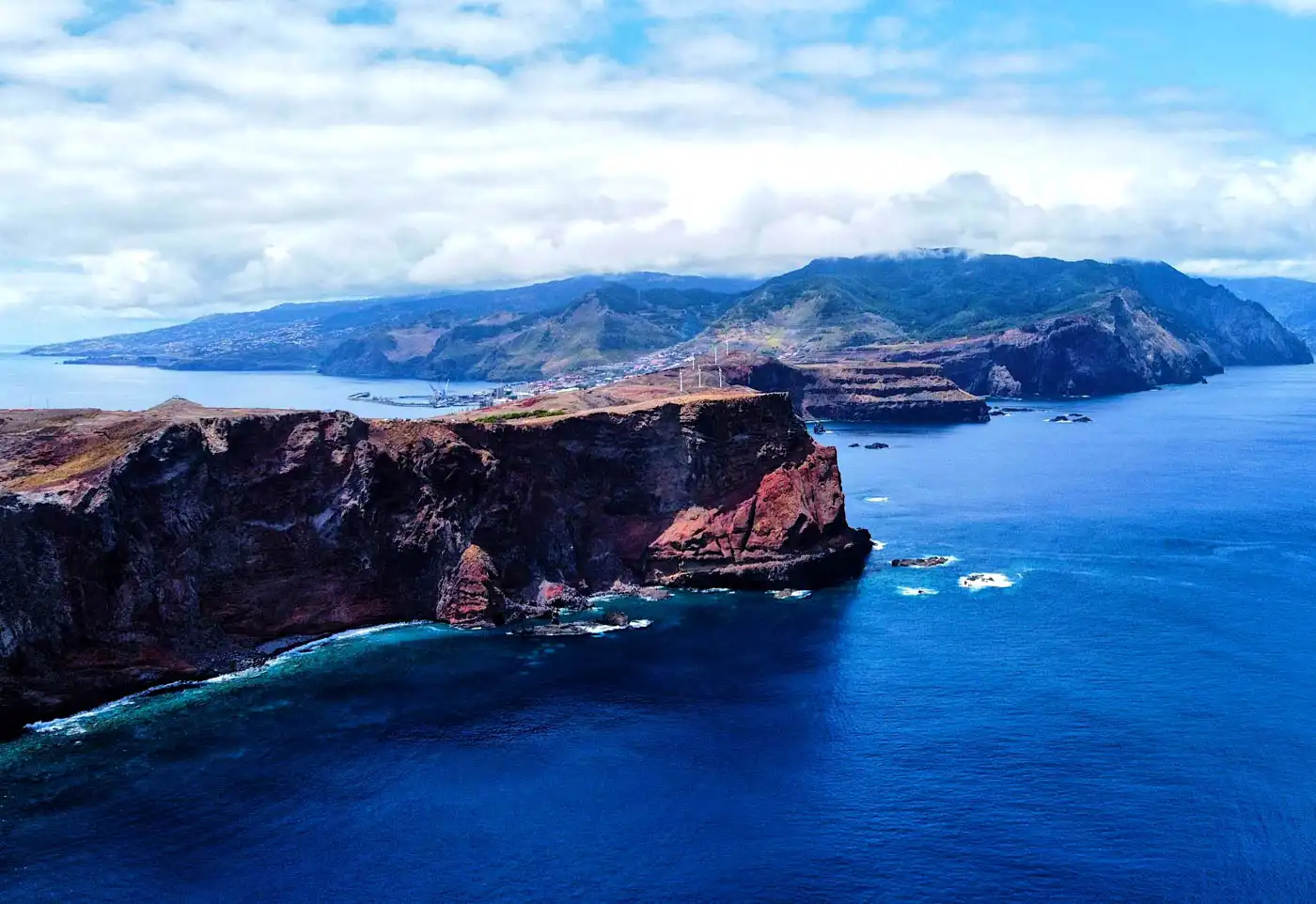
Madeira is a volcanic island with very high cliffs. Fajãs appear where parts of these cliffs collapsed into the sea or where lava flows reached the ocean and cooled. The result is a strip of land, often unstable yet fertile, resting between rock walls and waves.
Geologists describe fajãs as temporary landforms on a human time scale. Fajãs are constantly reshaped and threatened by erosive and coastal processes. Erosion continues, and the sea slowly takes parts of them away. This constant risk explains why fajãs remain few and scattered across the island.
How Gravity, Lava, and the Atlantic Ocean Form Fajãs
Two main processes create fajãs in Madeira: gravitational landslides and volcanic activity.
Gravitational landslides
Large sections of cliff break off and fall, often after heavy rain or earthquakes. The debris settles at sea level and forms a rough platform.
Volcanic activity
The second process is volcanic. When lava flows reach the ocean, they cool quickly and create new land.
Both processes lead to ground that is rocky, uneven, and fragile. Farming on such land required patience and deep local knowledge.
Access by Footpaths and Sea Routes Shaped Daily Life
For centuries, access to fajãs was extremely difficult. Many could only be reached by narrow footpaths cut into cliffs or by small boats when the sea allowed it. This isolation limited trade and contact with the rest of the island.
In recent decades, cable cars and improved paths have reduced some of the physical barriers. Still, weather and rockfalls continue to control movement. Even today, reaching a fajã often requires time and effort, and some can only be reached by boat.
Why Fajãs Matter to Madeira’s Cultural and Natural History
Fajãs display how people adapted to one of Europe’s steepest islands. They form an essential part of Madeira’s rural history, tied to small-scale farming, fishing, and seasonal living. Crops such as vines, vegetables, and fruit trees thrived in these narrow platforms, mainly due to the fertile soil and a warm microclimate.
Fajãs also matter for nature. Many host plant species that benefit from shelter and humidity. As a result, they act as small zones of biodiversity along the coast.
Isolation and Resilience Define the Human Story of Fajãs
Living in a fajã meant accepting risk. Rockfalls, storms, and the sea could damage homes and fields without warning. Yet families stayed, often for generations. They built stone houses, stored food carefully, and depended on neighbors.
This way of life created strong local ties. In several fajãs, people lived part of the year there and part of the year elsewhere, following agricultural cycles and sea conditions.
A Mild Microclimate Allows Crops Below Madeira’s High Cliffs
One striking feature of many fajãs is their microclimate. High cliffs protect them from strong winds, while the ocean helps keep temperatures warm and stable. Rainfall patterns also differ from higher ground above.
This climate allows crops to grow earlier and longer than in other parts of Madeira. In some fajãs, bananas, sugar cane, and vegetables thrive in conditions found nowhere else on the island.
Together, Madeira’s fajãs tell a quiet but powerful story. They show how geology shapes human choices and how people, in turn, find ways to live within strict natural limits.
Some of the Most Important Fajãs in Madeira
Fajã dos Padres – Located at the South coast. famous for coffee plantations, small settlement, and cable car access.
Achadas da Cruz – Northwest coast; terraced agriculture, cable car, and isolated rural life.
Fajã do Cabo Girão – Base of Cabo Girão cliffs - dramatic cliffs and farming terraces. Can be seen from the Cabo Girão Skywalk.
Fajã da Rocha do Navio – located in the North of Madeira, named after a 19th century Dutch shipwreck and a Natural Reserve.
Are Madeira’s Fajãs Still Widely Inhabited or Mainly Tourist Spots?
Many of Madeira’s fajãs are still lived in, but usually by small groups of people and sometimes only seasonally. Some, like Fajã dos Padres and Achadas da Cruz, still have working farms, where people grow coffee, bananas, and vegetables. These places also welcome tourists through cable cars or guided visits.
Other, more remote fajãs are mostly empty, with old stone houses showing that people used to live there. Some fajãs are now mainly for tourism, offering hiking paths, viewpoints, and cultural experiences. Life in the inhabited fajãs is still shaped by isolation and the difficult landscape.
Do Fajãs Exist Outside Madeira and the Azores?
While the name fajã is a cultural and geographical marker for the islands of Madeira and the Azores, you'll find identical geological features in the Canary Islands and analogous formations globally. The equivalent term in Canarian Spanish is fajana [faˈxana].


Comments