
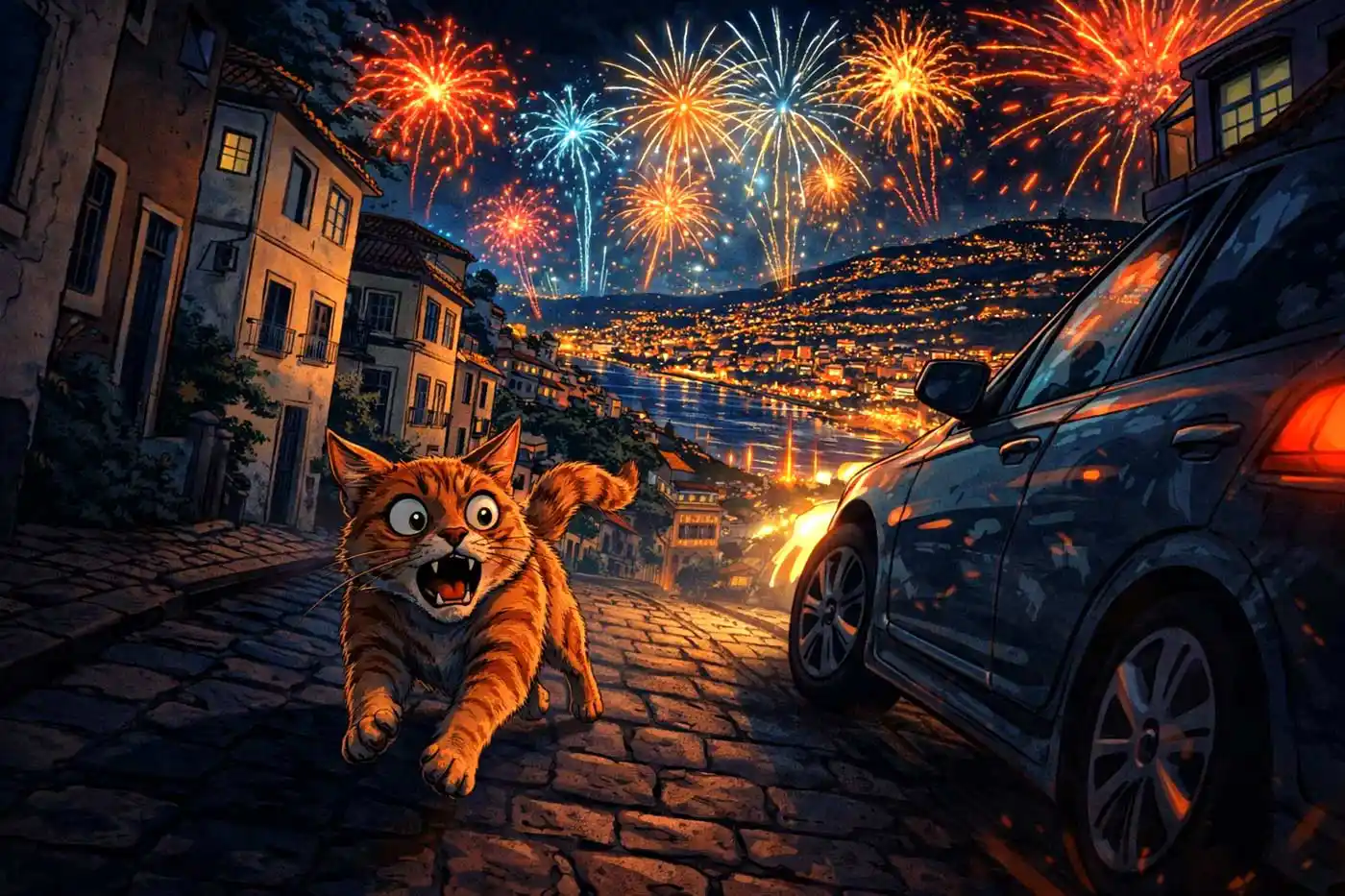
First Firecrackers Trigger Panic Responses Similar to Human Stress Reactions
For animals, fireworks are not festive sounds but sudden threats. Loud bangs, flashes of light and smoke can cause an intense stress response - the same basic reaction humans feel in moments of danger. Animals may freeze, try to flee or injure themselves while attempting to escape. What people see as beauty in the sky can feel like total chaos at ground level.
December 31 Is the Day With the Highest Number of Lost Pets
Animal welfare groups consistently warn that December 31 is the day when more pets go missing than any other day of the year. Terrified by fireworks, dogs and cats may jump walls, break through doors or slip out during visits. Social media pages quickly fill with posts from owners searching for animals that ran away during the night. Many of these cases follow the same pattern and repeat every year.
Veterinary Clinics Report 10% Increase in Emergencies in December 2024
Veterinary evidence shows clear links between fireworks and physical harm. Emergency visits rise in December, compared with the yearly average. Common cases include
fractures from traffic accidents
injuries caused by violent collisions and stress-related conditions.
Vets also warn that fireworks can trigger seizures in animals with epilepsy and urinary blockages in stressed cats. These injuries often arrive within hours of the loudest celebrations.
Calm Indoor Spaces and Professional Guidance Reduce Serious Risks
Veterinarians advise keeping animals indoors from the first fireworks until the following morning. A quiet room with soft bedding, food, water and background sound from a television or music can help reduce fear. For animals with severe anxiety, medication may be useful - but only when prescribed by a veterinarian, not from household supplies. Experts stress that simple preparation can prevent suffering and avoid the loss of animals during a night meant to welcome a new year.



Comments