
Isolated Landform Under 250‑Meter Cliff Formed 3.7 Million Years Ago
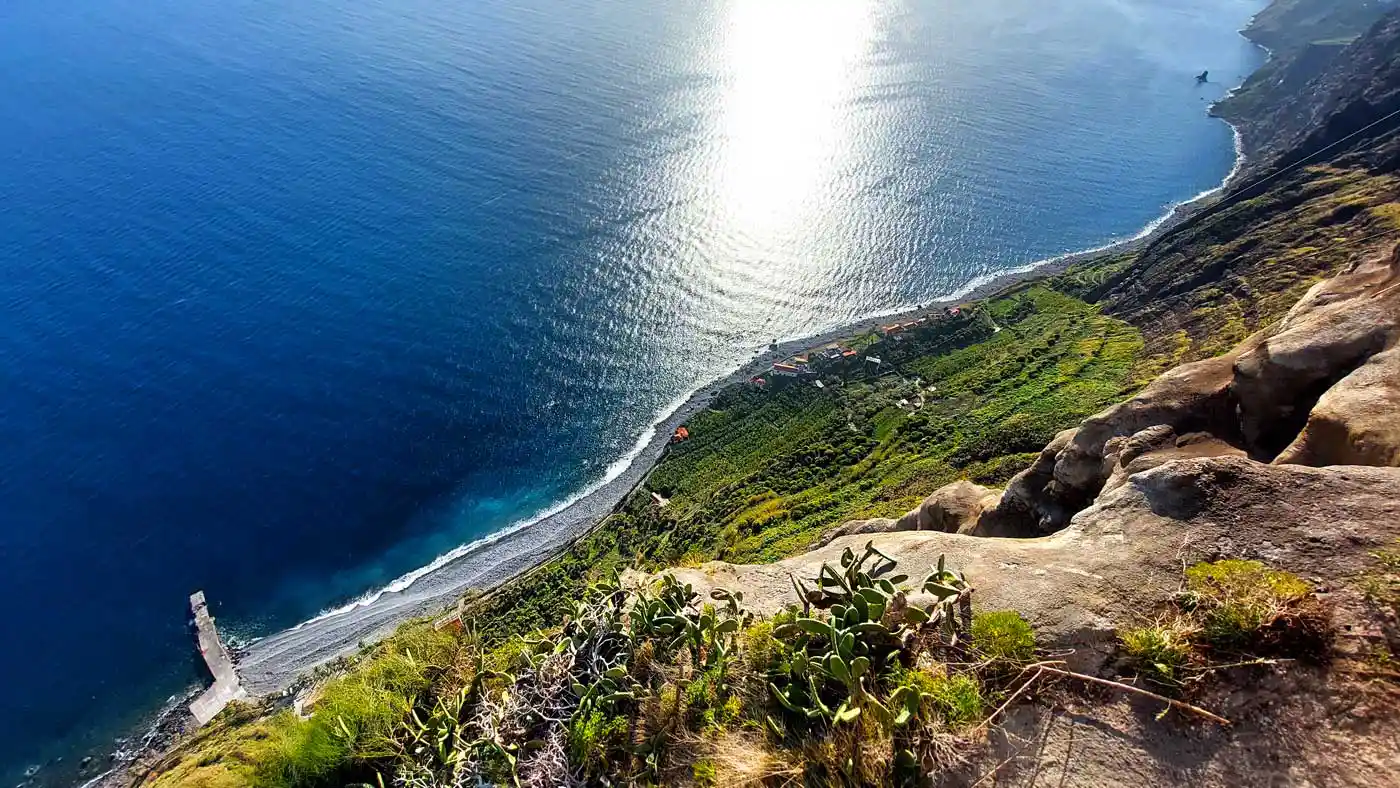
Fajã dos Padres is a narrow stretch of land on the south coast of Madeira, created by a massive rockfall about 3.7 million years ago. It has a size of about 15 hectares and lies beneath a cliff roughly 250 meters high. While opening mainly toward the Atlantic Ocean, it remained physically isolated until recent decades.
Jesuit Priests Owned Fajã dos Padres Vineyard for Over 150 Years Since 16th Century
The name Fajã dos Padres (“land of the fathers”) comes from its long ownership by the Jesuits of the Company of Jesus. Priests cultivated this land for more than 150 years from 1595 until 1759, introducing viticulture and other crops after it was settled early in Madeira’s colonization.
The Jesuits arrived in Madeira in 1570 and opened a college in Funchal (it is now part of the University). They sought the best locations for vineyards and produced high-quality wines. They received a small vineyard, now called Fajã dos Padres, west of Câmara de Lobos. It still produces the most famous Malmsey on the Island.
Private Ownership Begins (1770–Early 1900s)
João Francisco de Freitas Esmeraldo, from one of Madeira’s noble land-owning families, bought the property at auction in 1770 from the Portuguese Crown. He was the first recorded private owner of Fajã dos Padres. For the next 150 years, it passed through several private hands amid viticultural crises like oidium and phylloxera on the island.
Jardim Fernandes Family Era (1920s–Today)
Joaquim Carlos de Mendonça purchased it around 1919–1921; his granddaughter later inherited the estate and married Mário (or Emanuel) Jardim Fernandes. For the past three generations, the Jardim Fernandes family has managed Fajã dos Padres, discovering the sole-surviving Malvasia vine and producing single-vineyard Malmsey wine.
Named after the Jesuit priests who founded the vineyard in 1595, Fajã dos Padres has been in the Jardim Fernandes family for three generations. They were the ones to discover the sole-surviving malvasia vine, and now produce single-vineyard Malmsey on site.
Malvasia Wine Was Among Madeira’s Most Sought After Before 1759
Before the mid-18th century, Malvasia wines from Madeira were already part of the island’s growing wine trade. Madeira wine, especially the sweetest styles made from the Malvasia Cândida grape (known in English as Malmsey), was exported to markets such as England and northern Europe, where it became prized for its sweetness and ability to travel long distances.
Malvasia Wine: The King of Madeira
Historical accounts note that Malvasia had a reputation for quality from the 16th century onward, reaching buyers in England and beyond. Madeira wine as a whole was one of the most popular luxury beverages in the Atlantic world in the 17th and 18th centuries, with English merchants particularly active in its trade.
The 1662 marriage of Catarina de Bragança to Charles II of England further consolidated the links between Portugal and England. The wines from Madeira dominated the Atlantic trade (over 75%) while the Açores accounted for less than 10%. The Canary wines had nowhere to go but Spain. The demand for Madeira wines was beyond the island’s production capacity.
Vine Diseases in 1850s Destroyed Most Vineyards Except This One
In the 1850s and 1860s, outbreaks of oidium and phylloxera destroyed almost all vineyards on Madeira, ruining many families who depended on wine. Fajã dos Padres was a rare exception because of its isolation. Its small vineyard survived while others were lost, showing how its remote location helped protect it and how the local growers managed to keep it alive despite the challenges.
Only About 0.5 Hectare of Original Malvasia Vineyard Remains Today
Today, the surviving Malvasia Cândida vineyard at Fajã dos Padres covers only about 0.5 hectares. Annual production of this rare wine is very small, ranging up to 2,000 liters in good years.
Difficult Access: A Remote and Isolated Fajã
For centuries, life at Fajã dos Padres was shaped by isolation. Before modern access, people and goods reached the fajã primarily by sea, using small boats that depended heavily on weather and ocean conditions. Agricultural work was physically demanding, and transporting wine, fruit, and supplies required careful planning. During periods of rough seas, residents could be cut off entirely, reinforcing the self-sufficient nature of the small community that lived and worked there.
Alternative Modes of Transportation Implemented in Recent Years
Early 20th‑century discussions included plans to improve land access to the fajã, such as building a road, but these projects never materialized, partly because the terrain made them impractical. While it was possible to climb the steep, challenging path along the cliffs, the most reliable access for a long time remained by sea.
Accessing Fajã dos Padres Today
In 1997, a panoramic elevator was finally built from the cliff top to the fajã, providing reliable access by land for the first time. This elevator originally served as the main access from the cliff‑top road down to the fajã. The elevator is a vertical lift, essentially like a very tall outdoor elevator built into the cliff.
Cable Car Added to Connect Fajã to Cliff‑Top in 21st Century
In recent decades, improved infrastructure added a cable car service to link Fajã dos Padres with the top of the cliff at Quinta Grande. Since the cable car was installed around 2006, it became the primary way for visitors to go up and down, and the elevator is now used mainly to transport goods (like supplies, equipment, and harvests).
Fajã dos Padres Today: Heritage, Tourism, and Agriculture
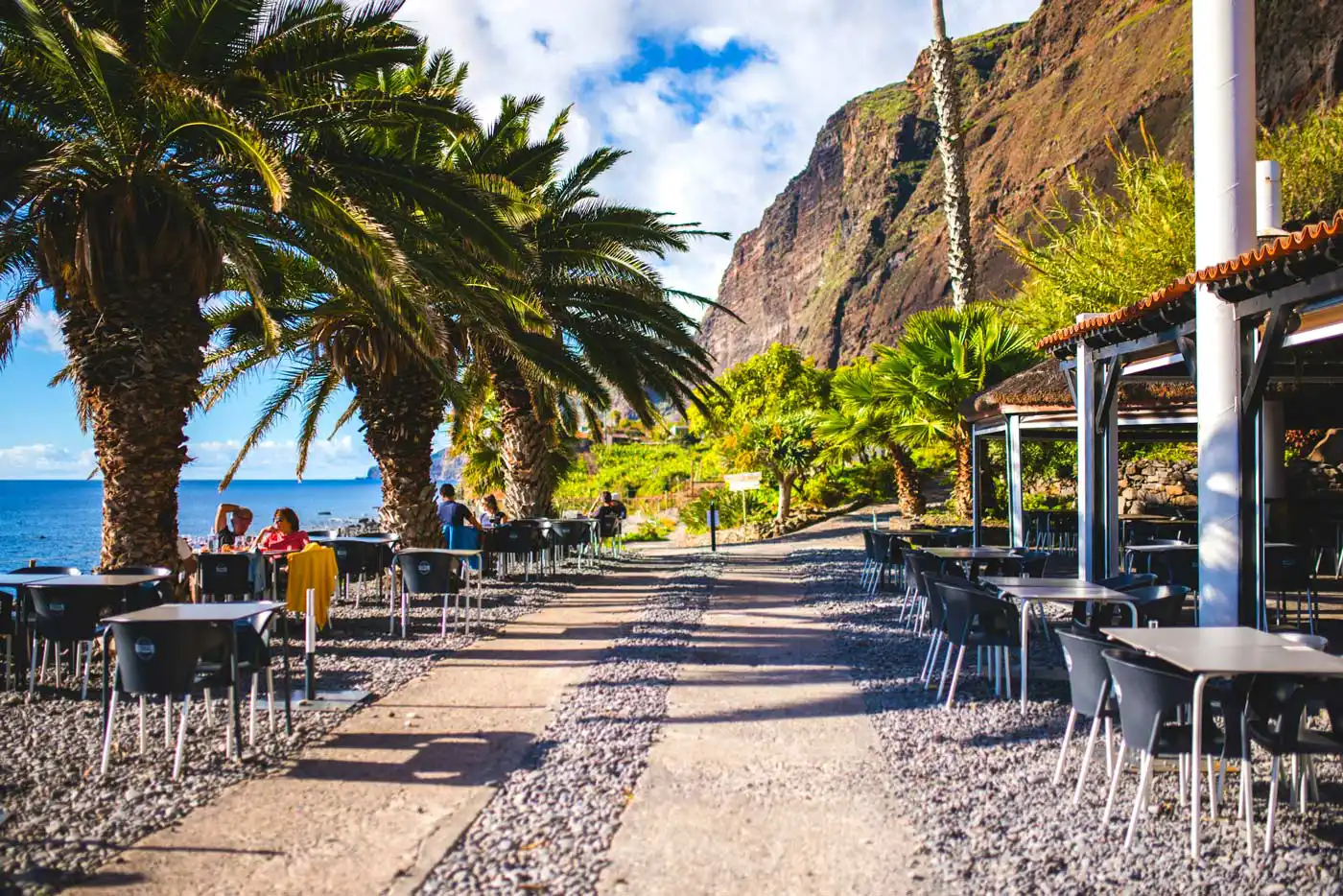
Today, Fajã dos Padres welcomes visitors who want to experience its history, nature, and coastline. A small number of on-site cottages provide accommodation with direct access to the beach, restaurant, and farm terraces. Visitors can swim or sunbathe on the pebble beach, and the beachfront restaurant also serves as a bar, offering Madeiran food and drinks made from local produce. The tropical orchards, including bananas, mangoes, and avocados, can be explored, and the views of the Atlantic are striking. The fajã remains quiet and peaceful, despite having become a well frequented spot by both residents and tourists.


Comments