
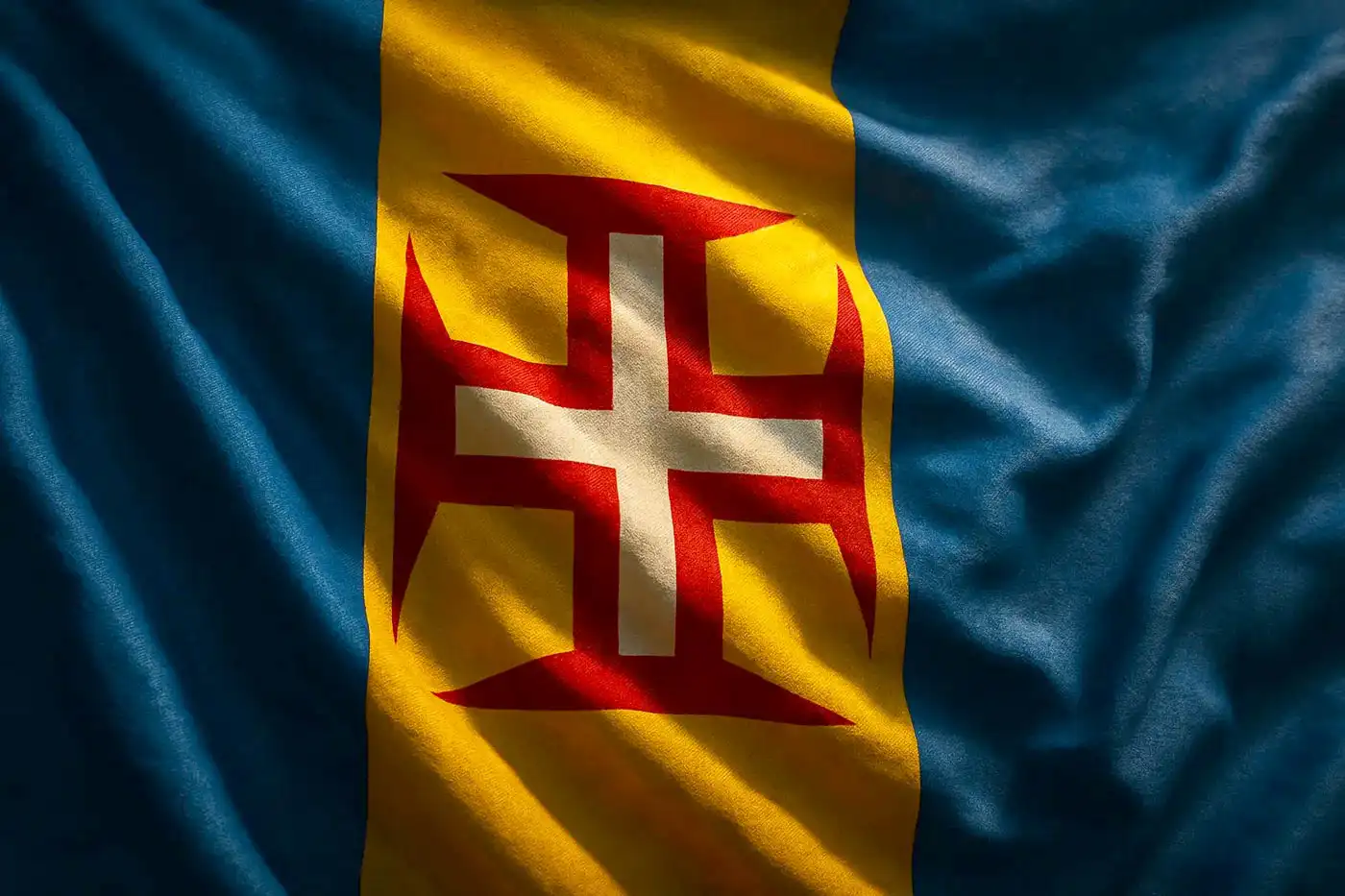
Adoption of Regional Flag in 1978 Formalised New Autonomy
The flag of the Autonomous Region of Madeira was officially adopted on 28 July 1978, when the regional legislature approved its design - later codified in Regional Decree 30/78/M (12 September 1978).
This step came after Madeira received political autonomy on 1 July 1976, following Portugal’s transition to democracy in the mid-1970s.
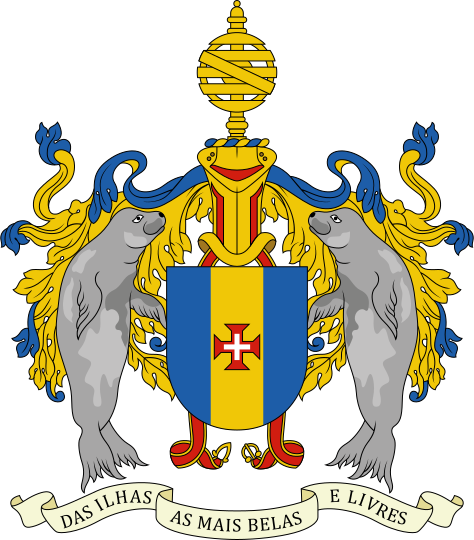
With the adoption of the flag, Madeira gained its own official symbols - flag, coat of arms, and seal - to represent its status as a legally distinct region within Portugal.
Colours Blue and Gold Convey Island Identity and Climate
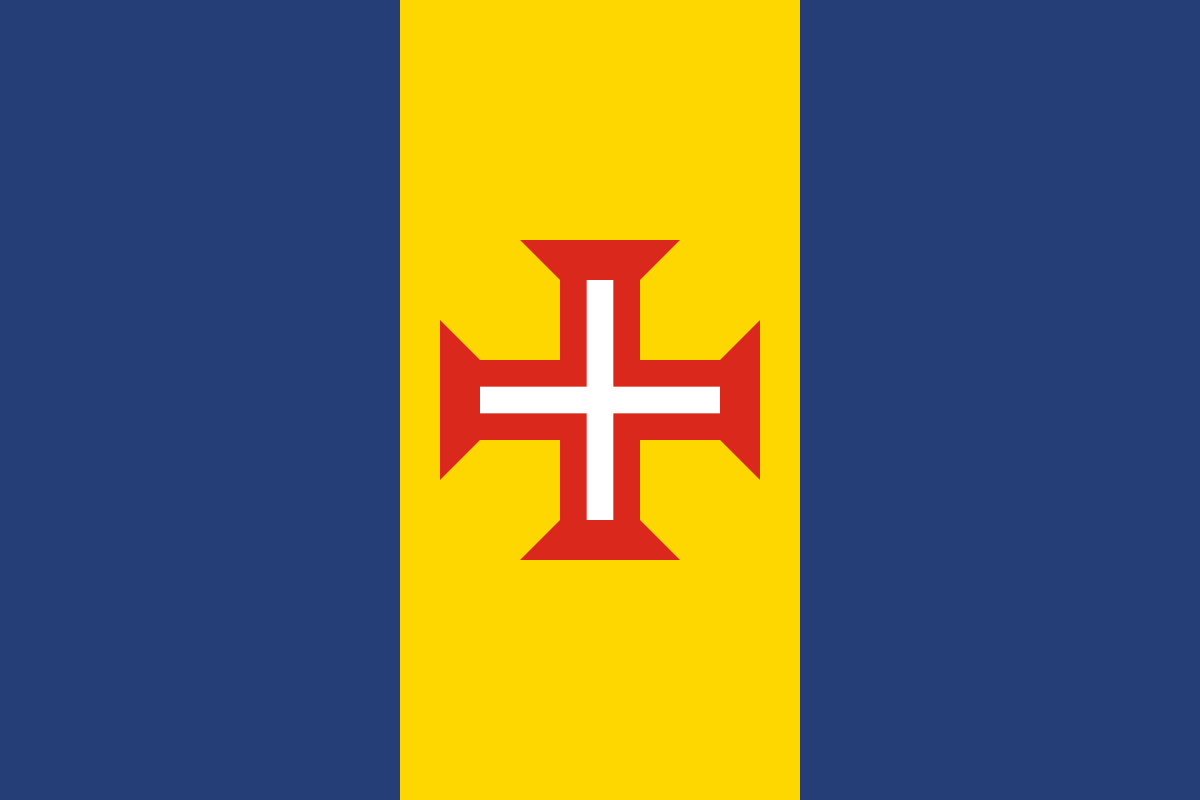
The flag uses a vertical triband: two outer stripes in blue, and a central stripe in gold (yellow).
According to the official explanation, blue represents
the island’s natural environment and maritime setting
its insular character
serenity
nobility
Gold (or yellow) stands for the mild climate of the archipelago and symbolizes wealth, strength, faith, purity, and continuity.
Cross of the Order of Christ Links Madeira to Portugal’s Discovery Era
At the centre of the gold stripe appears the Cross of the Order of Christ, rendered as a white cross with a red border. This emblem goes back to the early 15th century, when Madeira was discovered by knights under the patronage of the Order - notably captains João Gonçalves Zarco and Tristão Vaz Teixeira.
The cross signals Madeira’s historical roots in the Portuguese Age of Discoveries and emphasizes its constitutional link to Portugal - even as the region asserts a distinct identity.
Flag Design Shifted from Separatist Symbol to Regional Emblem
In the mid-1970s, during political changes after the 1974 Carnation Revolution, a separatist group, FLAMA (Madeira Archipelago Liberation Front), had adopted a blue-yellow-blue triband flag.
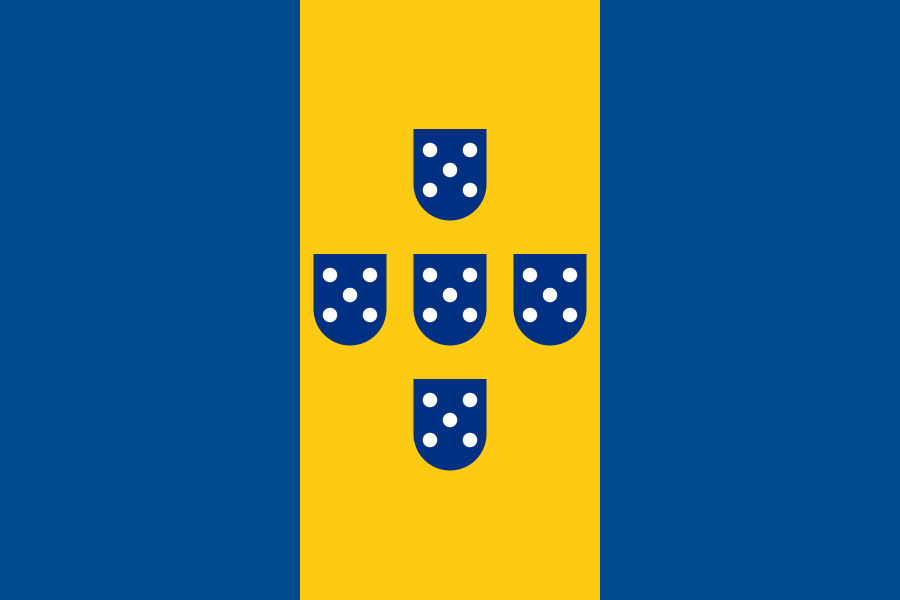
When the official flag was chosen, the regional assembly reused the same basic colour pattern - but added the Cross of Christ - transforming the design from a separatist emblem into a symbol of autonomous governance within Portugal.
Through that choice, leaders preserved popular attachment to blue and gold while changing its meaning from independence to regional identity under the Portuguese constitution.
However, it is a fact that these colors have become deeply rooted in the hearts of the Madeiran population. While the vast majority reject the anti-Portuguese stance of the separatists, the symbolism of the colors has come to signify something substantial about the unique character of the Autonomous Region.
Displaying emblems in other colors would mean nothing to the Madeirans, and the separatists would have built around the blue and gold an aura of heroic secrecy, superficially appealing to the collective subconscious, to the point of successfully imposing anti-patriotic symbolism.
Regional Decree 30/78/M (12 September 1978)
Madeira’s flag - with its blue-gold-blue bands and the historic cross - stands as a visual statement of identity. It acknowledges the islands’ environment and heritage, the mild climate that shapes daily life, and their deep roots in Portugal’s maritime past. At the same time, the flag represents the region’s autonomous status - a balance of belonging and individuality.


Comments