
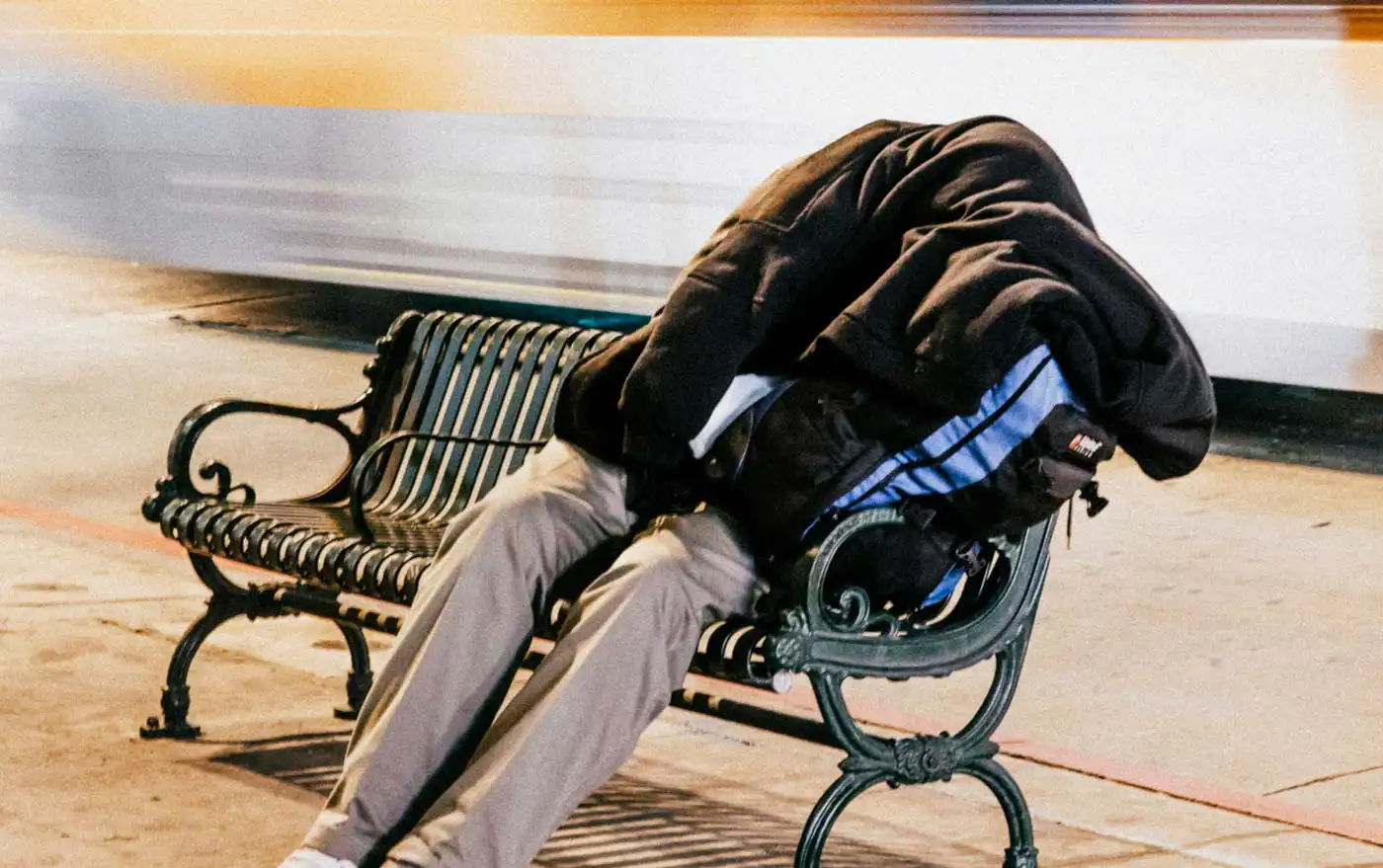
Alcohol and mental health problems are making it harder for people in Funchal to get off the street, as RTP Madeira reported today. Depending on who counts and how, the city has between about 80 and 130 people without a home. The mayor says 37 of them have already left the street and are now integrated.
The figures were presented at a conference in the Auditório dos Jesuítas in Funchal. The event looked at homelessness from the point of view of people who live on the street or were pushed onto it.
| People | |
|---|---|
| Often quoted figure for people on the street (Sílvia Ferreira, Centro de Apoio ao Sem-Abrigo) | 120-130 |
| People who use the street, the city's own definition (Jorge Carvalho, mayor) | about 80 |
| People without a roof, wider definition (Jorge Carvalho, mayor) | up to 100 |
| People followed by the Centro de Apoio ao Sem-Abrigo | about 70 |
| Of those, waiting to be able to leave the street | 4-5 |
| Taken off the street and now integrated (Jorge Carvalho, mayor) | 37 |
City Counts About 80 People on the Street and 100 Without a Roof
Jorge Carvalho, the mayor of Funchal, said the exact number is hard to pin down at any given moment. The city's own definition of a homeless person is someone who uses the street. By that measure, Funchal has about 80 people.
The number rises when the definition widens. Counting everyone without a roof, the mayor said, the total goes up to about 100. The city council also accepts the often quoted range of 120 to 130, according to RTP Madeira.
There is always some difficulty in defining the exact number at a given moment. In Funchal, those we consider homeless, the ones who use the street, are about 80. However, if we widen it to people who have no roof, that number rises to about a hundred.
Jorge Carvalho, mayor of Funchal
Support Centre Follows 70 People and Hears Figures of 120 to 130
Sílvia Ferreira of the Centro de Apoio ao Sem-Abrigo, the city's homeless support centre, is currently following about 70 people in a situation of homelessness. She said housing is one of the biggest problems, alongside other difficulties.
The figures of 120 or 130 people on the street are often repeated, she said, but the group changes all the time. Some people arrive on the street while others leave it. At least four or five of the people the centre follows are waiting to be able to leave the street.
We often say there are 120 people on the street, or 130 people on the street, and in fact the numbers vary among those people. It is just that there are people coming in and people leaving too. At the moment we are following around 70 people in a situation of homelessness.
Sílvia Ferreira, Centro de Apoio ao Sem-Abrigo
Others are not on the street at all but still have nowhere to go. Some people admitted at the Casa São João de Deus are waiting for a home before they can leave, she said.
Mayor Says 37 People Are Already Off the Street and Integrated
The mayor preferred to point to results rather than to the size of the problem. According to RTP Madeira, the city's work has already paid off for about 40 people. Jorge Carvalho put the exact figure at 37 people taken off the street and now integrated.
What is important is that 37 people have already been taken off the street and are now integrated.
Jorge Carvalho, mayor of Funchal
After 35 Years in Panama, One Man Now Works for the City Council
One of those stories is that of Arlindo Fernandes, who went to Panama to work in fishing on the country's tuna boats. Later came work on a self-employed basis. After 35 years there, Fernandes had to ask for help.
Fernandes arrived in Funchal with almost nothing and without knowing the city. The Associação de Proteção dos Pobres, an association for the protection of the poor, was the first stop. Today Fernandes is integrated in society and works in the Environment Department of Funchal city council.
When I went there, I went for the fishing, working on the tuna boats of Panama. But I never had luck, because I started working for myself, on my own account. I was there 35 years and I had to ask for help.
Arlindo Fernandes, former homeless person, now a Funchal city council employee
Many other people in Funchal are still waiting for a similar ending, RTP Madeira reported. Housing is one obstacle on the way off the street, and alcohol and mental health problems are others.

Have you noticed more or fewer people sleeping rough in Funchal over the past year, and where?
Source: madeira.rtp.pt




Comments