
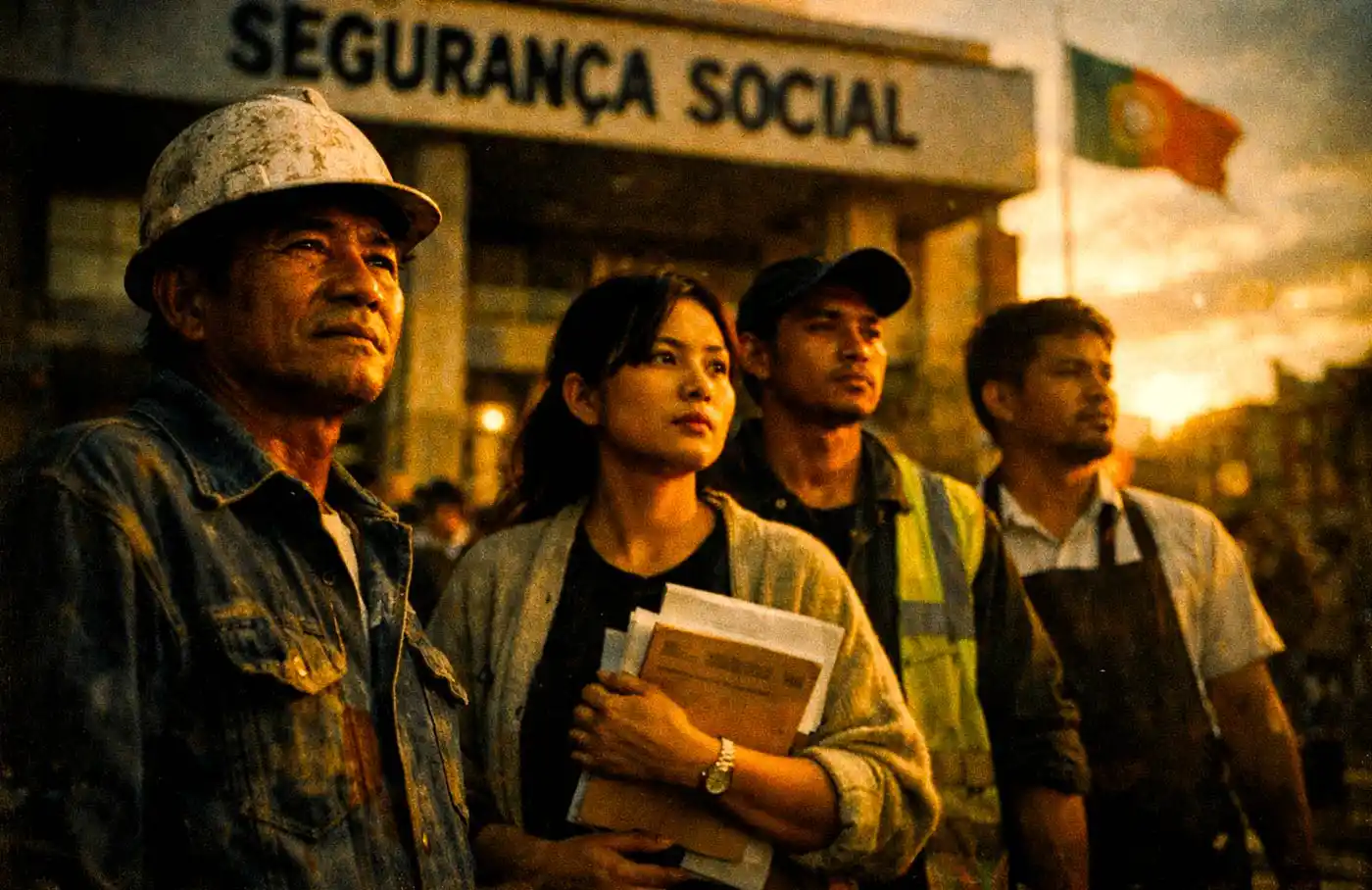
January - October Data Shows €3.1 Billion Paid by 1.76 Million Foreign Workers in Portugal
From January to October, foreign workers in Portugal paid more than €3.1 billion into the country’s Social Security system. The figures cover the first ten months of the year and include contributions from about 1.76 million people. The amount paid is five times higher than the value of social support received by this group during the same period. Immigrant workers are a central source of funding for the system at a time of rising labor demand.
Only 367,000 Immigrants Received Social Benefits Totaling About €600 Million
During the same ten-month period, 367,000 immigrant workers received social benefits worth just over €600 million. This represents roughly one fifth of what they paid into Social Security. The support included payments regarding:
family allowances
maternity
illness
unemployment
The figures challenge a common public belief that immigrants rely heavily on social support.
Family Benefits Led Payments, With 135,000 Recipients and €200 Million
Family-related support formed the largest share of benefits granted to immigrant workers this year. Around 135,000 people received family allowances worth more than €200 million. Payments linked to maternity and paternity also stood out, reaching over 30,000 beneficiaries. These numbers align with a higher birth rate among immigrant families, a trend that has gained attention in recent demographic studies.
The European Commission warns that the decrease in immigrants from outside Europe coming to Portugal will jeopardize the sustainability of the Social Security system.
Foreign Nationals Make Up 20% of Social Security Contributors
Foreign nationals now account for about 20% of all workers contributing to Social Security in Portugal. Their presence is especially strong in hospitality, where one in four workers is an immigrant. These sectors depend heavily on foreign labor, particularly in urban centers and tourist areas, tying immigration closely to the country’s economic stability and workforce needs.
Source: SIC Notícias



Comments