
March 2026 Rents Drop 1.2% to Median 16.4 Euros per Square Meter
Rental prices in Portugal fell again in March 2026, continuing a short-term downward trend after several years of strong growth. According to data from Idealista, rents decreased by 1.2% in March, following declines of 1.9% in January and 1.4% in February.
The median cost of renting a home now stands at 16.4 euros per square meter, moving further away from the peak of 17 euros per square meter recorded in October 2025. The recent decline comes as more large residential properties enter the market, increasing supply.
12 of 16 District Capitals See Annual Rent Increases Despite National Decline
While national figures show a yearly decrease, most major cities are still becoming more expensive. Rents increased in 12 of the 16 district capitals analyzed.
The largest annual increases were recorded in Bragança (23.2%), Viana do Castelo (15.2%) and Setúbal (12.2%). Other notable rises include Leiria (10.8%), Ponta Delgada (10.4%) and Santarém (9.2%).
Smaller increases were observed in cities such as Aveiro (5.6%), Funchal (5.5%) and Faro (4.2%), while Évora saw a modest rise of 0.6%.
At the same time, rents remained stable in Lisbon (-0.1%) and fell in Porto (-4%), Viseu (-3.9%) and Braga (-3.2%).
Lisbon at 22 €/m² Remains Most Expensive City, Followed by Porto and Funchal
Lisbon continues to be the most expensive city for renters, with a median price of 22 euros per square meter. Porto and Funchal follow, both at 16.8 euros per square meter.
Faro ranks next at 14.8 euros per square meter, followed by Setúbal (13.8 euros) and Coimbra (12.9 euros). Mid-range cities include Braga (10.3 euros), Viana do Castelo (9.9 euros) and Santarém (9.6 euros).
The most affordable cities remain Viseu and Bragança, both at 7.5 euros per square meter, and Castelo Branco at 6.9 euros.
Over the past 12 months, rental house prices rose in four of the seven Portuguese regions analyzed, fell in two, and remained stable in one.
The largest annual increases were recorded in the Azores Autonomous Region (8.8%), followed by the Center (6.3%), the Madeira Autonomous Region (6.1%) and Alentejo (5.3%).
District Data Shows Bragança Up 47.3% While Porto Falls 3.9%
Looking at a wider regional level, rents increased in 14 of the 20 districts and islands over the past year.
Bragança recorded the largest rise, with rents increasing by 47.3%. Beja (15.3%) and the island of São Miguel (11.8%) also saw strong growth. Coimbra (10.2%) and Castelo Branco (10.7%) followed.
In contrast, the sharpest declines were seen in Vila Real (-17%), Guarda (-13.4%) and Porto (-3.9%). Faro also recorded a slight decrease of 1%.
Lisbon district remained stable, with a marginal change of -0.1%.
Lisbon District at 20.2 €/m² Leads Ranking Ahead of Madeira and Faro
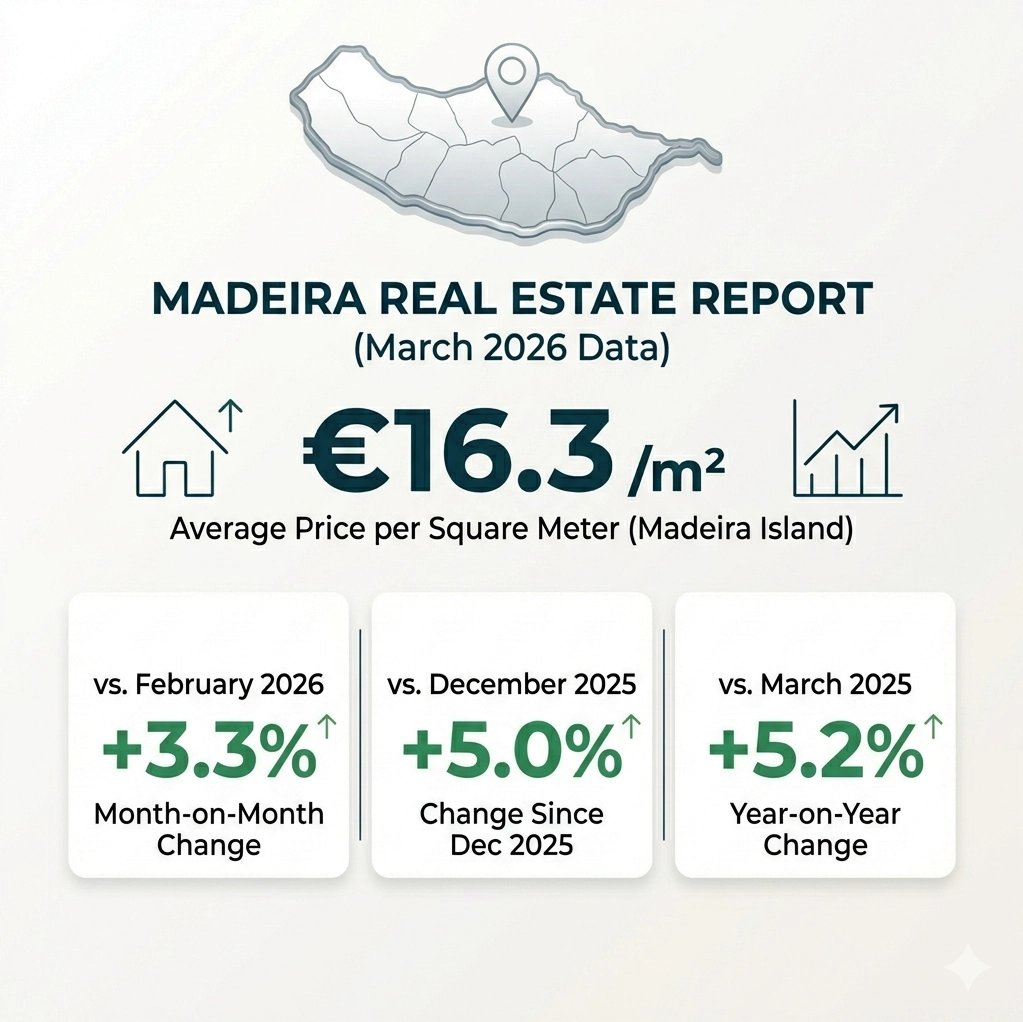
At the district level, Lisbon remains the most expensive area, with rents at 20.2 euros per square meter. It is followed by the island of Madeira (16.3 euros) and the Faro district (15.2 euros).
Other higher-cost areas include Porto (15 euros) and Setúbal (14.6 euros). Meanwhile, regions such as Viseu (7.4 euros), Portalegre (7 euros), Vila Real (6.8 euros) and Guarda (6.2 euros) remain the most affordable.
Algarve and Northern Regions Record Annual Rent Declines of -1% and -4.6%
Regional data shows a mixed picture across the country. Rents increased in four of the seven regions analyzed, while two regions recorded declines and one remained stable.
The largest increases were seen in the Azores (8.8%), followed by the Center (6.3%), Madeira (6.1%) and Alentejo (5.3%). The Lisbon metropolitan area remained stable at 0.1%.
However, rents fell in the North (-4.6%) and the Algarve (-1%), suggesting that price pressure may be easing in some of the country’s most active rental markets.
Idealista Index Based on Median Listing Prices Excluding Outliers
The Idealista price index is based on advertised rental listings, calculated using the median price per square meter. The methodology excludes atypical listings and properties with little user interaction over time.
It also includes single-family homes, aiming to provide a more complete view of the rental market.
The latest data suggests that while short-term rent declines are now visible, pressure remains in many urban areas where demand continues to exceed supply.




Comments