

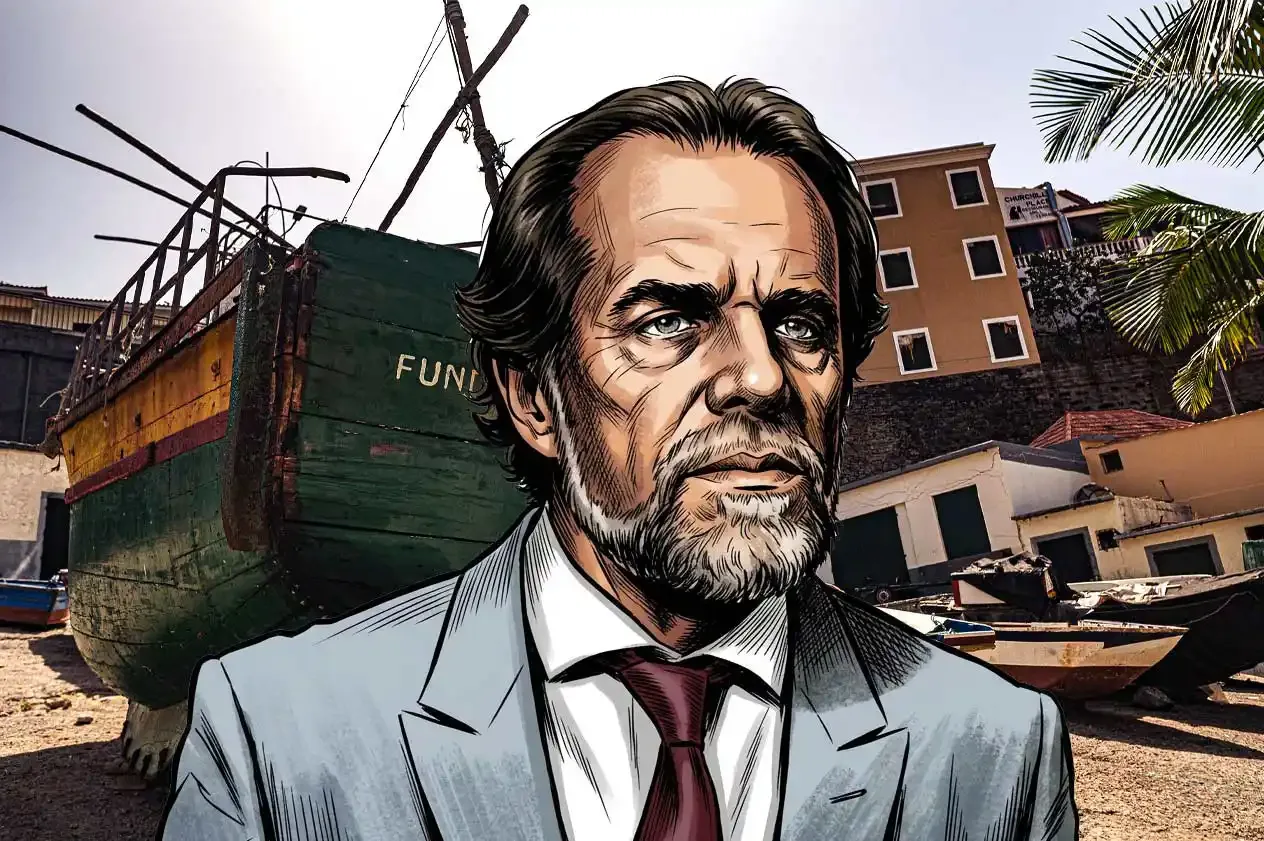
Miguel Albuquerque, president of Madeira's Regional Government, said society is too influenced by pessimistic narratives. He blamed misinformation and social media for creating the perception that the world is on the brink of catastrophe.
We are not on the brink of an apocalypse.
Miguel Albuquerque, President of Madeira's Regional Government
That was the central idea of his speech at the Madeira Congress of Psychologists, held at the Centro de Congressos da Madeira. He called for greater value to be placed on facts, science and rational thought.
Albuquerque Thanks Psychologists Before Turning to Data
Albuquerque opened by thanking psychologists for their work, calling the profession fundamentally important to society. He then shifted his focus to how people perceive reality and the future.
Drawing on the authors Steven Pinker and Hans Rosling, he warned of what he called a deficit of factual information. He linked it to excessive social media use, where he said emotional reactions and inaccurate information often prevail.
We have a deficit of factual information about reality.
Miguel Albuquerque, President of Madeira's Regional Government
He argued the idea that the world is getting worse, facing an imminent catastrophe, does not match global indicators of progress.
Life Expectancy Rose From 50 to 73.8 Years
To back his position, Albuquerque presented several historical figures. He started with life expectancy: in 1961, the year he was born, the global average stood at around 50 years. Today it is 73.8 years.
He attributed that gain to progress in medicine, prevention, nutrition and access to healthcare.
Extreme Poverty Fell for 700 Million People
Albuquerque also pointed to extreme poverty. Between 1990 and 2010, he said, about 700 million people moved out of that condition worldwide.
World Literacy Climbed From 40 to 88 Percent
Global literacy, he said, rose from about 40% of the world's population in 1961 to 88% today. He also cited falling child mortality, linking it to progress in vaccination, basic sanitation and maternal care.

He also argued that the perception of a world in permanent crisis ignores history. He pointed to past conflicts, international tensions and threats to global security. As examples, he cited the Cold War and the Cuban missile crisis.
The world is better.
Miguel Albuquerque, President of Madeira's Regional Government
He said progress should not be treated as a subjective perception, but as a reality that can be measured through concrete indicators.
Albuquerque Pledges Continued Support for Psychologists
Albuquerque closed with a message on the role of science, research and democratic institutions in helping societies overcome difficulties. He said it is necessary to counter excessive pessimism, and to stop baseless information from feeding a dark view of the future.
He confirmed the Regional Government will keep supporting the psychology profession, which he called essential to society.
Source: dnoticias.pt




Comments