
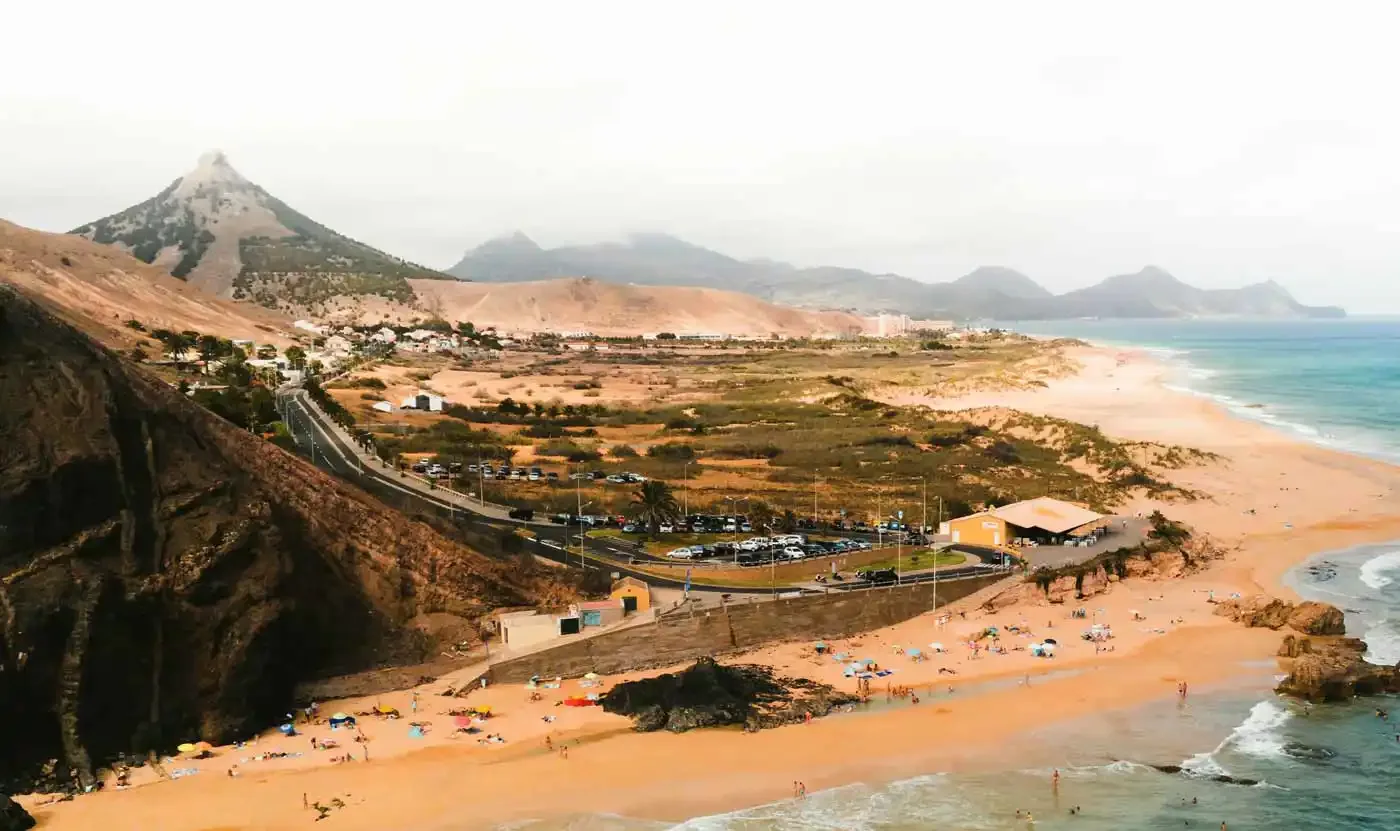
An architect's plan to bring controlled-cost, sustainable housing to Porto Santo is moving from idea to paperwork. The project, called Paraíso Possível, would put the first homes up through a housing cooperative rather than a developer or the state.
Architect Bernardo Rodrigues, who is from the Azores, leads the project. After reviewing several sites on what is often called "the golden island", his team identified a plot with room for a first group of homes.
Plan Would Build Three to Four Homes in Porto Santo
The team has already found a plot that could hold three to four houses. Real people have signed up to move forward with it, Rodrigues said. He wants this first build to prove the model works on the island.
We reached a first project, on land that can take three to four houses, which already has real people who want to move ahead with it.
Bernardo Rodrigues, architect behind Paraíso Possível
The proposal has already gone to the Porto Santo municipal council and to other local players. The project is now in a preparation phase, Rodrigues told JM.
Under the model, the future residents themselves form a cooperative. They organize to buy the land and develop the project together, splitting costs and responsibilities.
Rodrigues said this gives people who need housing a legal tool. The residents then own both the land and the process themselves.

Cooperative Housing Model Has Roots in the Azores Since 2020
Paraíso Possível is not a Porto Santo invention. Rodrigues has developed the model since 2020, drawing on controlled-cost housing projects in the Azores.
It covers three types of homes, aimed at young people starting out, families and seniors. These are built into small housing clusters with green space and shared common areas, rather than standing as single isolated houses.
The goal, Rodrigues said, is to bring back a sense of neighborly closeness that he feels Porto Santo has lost over time.
It's that kind of closeness, where kids could play ball in the street and there was trust that the neighbor looked after our animals.
Bernardo Rodrigues, architect behind Paraíso Possível
Common Park Would Catch Rainwater on Dry Porto Santo
Water is one of the project's central concerns, given Porto Santo's dry climate. The plan includes a shared park built to collect and hold rainwater, feeding the site's plants and storing water for later use.
The homes would also generate their own power, mainly through photovoltaic panels. That is part of a wider push toward self-sufficiency on the plot.
Builder Used Same Timber for April's Pestana Dunas Resort
The houses would be built with cross-laminated timber (CLT), a system that simplifies the structure and cuts construction time compared with conventional building methods.
The construction firm Nogueira Fernandes is part of the consortium behind the project and already has experience with the material on Porto Santo. The company worked on the Pestana Dunas eco-resort, which also used CLT and opened on the island in April this year.
Source: jm-madeira.pt




Comments