
Collapsed Volcano Crater & Rain
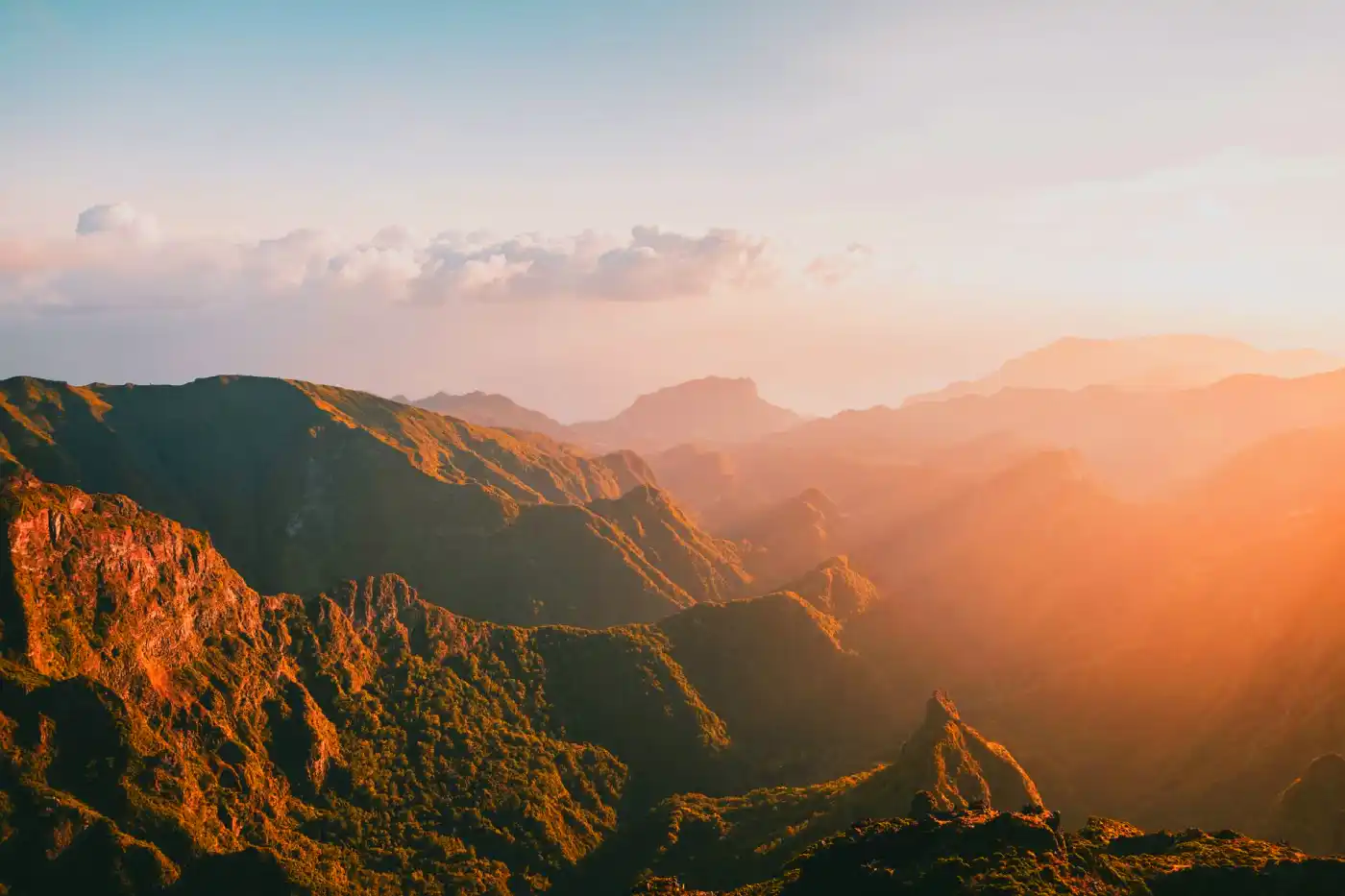
If you have ever hiked the famous trail between Pico do Arieiro and Pico Ruivo, you probably remember how dramatic it feels. You walk along a very narrow path, with deep green valleys dropping down on both sides.
Standing high above the clouds, many hikers ask themselves: Are we walking on the edge of a collapsed volcano crater, or did rain carve these sharp mountain ridges out of rock?
The answer is a combination of both! Madeira’s central peaks were not formed by a giant volcanic explosion that caved in on itself. Instead, these sharp ridges are the tough survivors of millions of years of heavy rain carving into the island's unique geology.
The Big Mistake: Valleys Made by Water, Not Cratering
When visitors stand at Pico do Arieiro and look down into Curral das Freiras (Nun’s Valley), they often think they are looking at a huge volcanic crater.
However, Madeira does not actually have large collapsed craters like Hawaii or Tenerife. The island's dramatic landscape was mostly shaped by simple weather over a very long time.
Millions of years ago, Madeira experienced non-stop, heavy rainfall. Rivers quickly formed and carved deep channels into the soft volcanic rock. Over thousands of years, these small river channels turned into giant, steep valleys, leaving only the highest rocky peaks behind.
The Hidden Secret: Hard Rock "Walls"
If rain washed so much of the mountain away, why didn't the entire island turn into smooth, rolling hills? Why are the ridges between the valleys still so thin and sharp?
The secret lies in structures called volcanic dykes.
When Madeira’s volcanoes were active, hot liquid magma pushed up through vertical cracks inside the mountain. When the eruptions finally stopped, the magma trapped inside these cracks cooled down slowly and turned into extremely hard basalt rock.
These vertical layers of rock acted like strong steel support beams inside a building. They created a tough, hidden skeleton right inside the mountain.
How Fire and Water Worked Together
This led to a process called differential erosion - which means soft rock wears away much faster than hard rock.
Most of Madeira’s mountains were made of soft volcanic ash and loose rocks. When heavy rain and wind hit the island, this soft material easily washed away into the sea.
However, the hard basalt "walls" inside the mountain stood strong. As the soft rock around them disappeared, these hard rock walls stayed in place, creating the razor-thin ridges we walk on today.
When you hike across Madeira’s peaks, you are literally walking on the exposed skeleton of an ancient volcano!

Comments