
More than a century before the University of Madeira opened in 1988, Funchal already had an institution training the island’s doctors.
The Escola Médico-Cirúrgica do Funchal - the Medical-Surgical School - began with just 11 students in 1837. Over the next 73 years, it trained roughly 240 physicians, helping shape healthcare and medical education across the archipelago.
A School Born From a Doctor Shortage
Madeira needed doctors.
In the 1830s, the island faced a shortage of medical professionals, and the Portuguese government responded by creating a school in Funchal. A decree signed on 29 December 1836 established the Escola Médico-Cirúrgica, with the explicit aim of addressing the island’s lack of physicians.
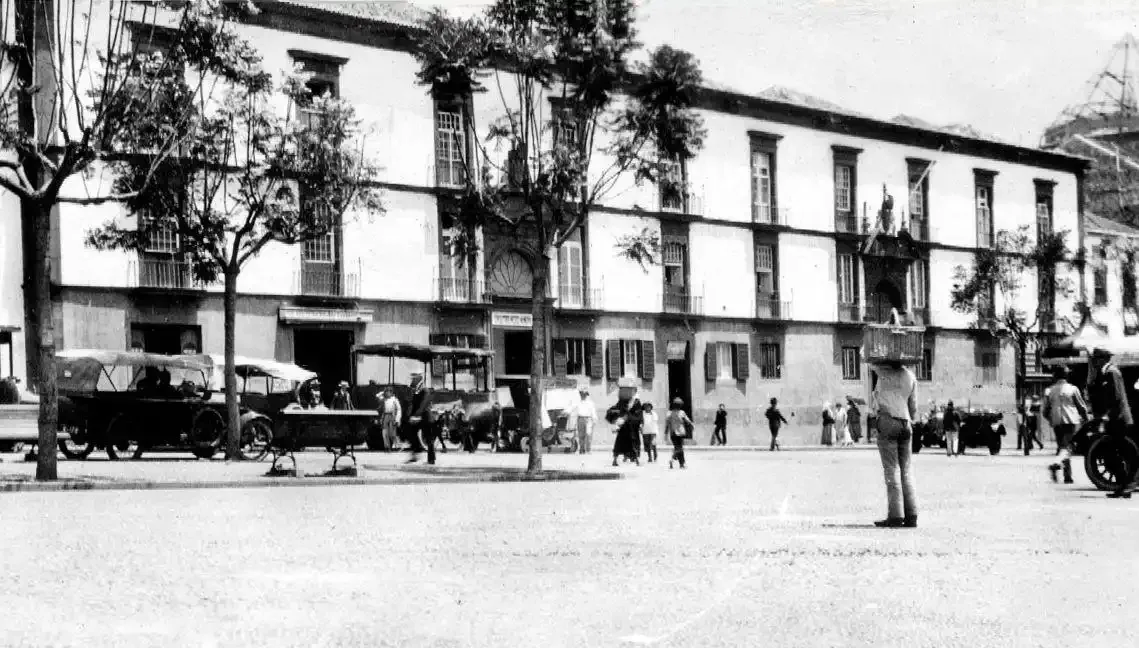
The school was installed in the Hospital de Santa Isabel, in the building where the Regional Government Palace stands today. Classes began in October 1837; a formal opening ceremony followed on 15 October 1838.
Eleven Students, Five Graduates, Simple Requirements
The first class was small.
Eleven students enrolled in the school’s first year. Five completed the course in 1840, becoming the first doctors trained in Funchal under the new institution.
At first, the entry requirements were strikingly simple: candidates needed only to read, write and count. The initial course lasted three years, offering a practical route into medicine at a time when formal higher education was scarce on the island.
A Curriculum That Became Considerably More Demanding
The original three-year course was replaced by a four-year programme in 1839.
Year | Subjects |
|---|---|
First | Anatomy |
Second | Physiology, materia medica and pharmacy |
Third | Pathology, therapeutics and surgical operations |
Fourth | Obstetrics, clinical medicine and clinical surgery |
From Hospital Wards to Medical Careers
For seven decades, the school operated at the heart of Funchal’s medical life.
Its students trained in a working hospital environment, and its graduates went on to practise across Madeira and, in some cases, beyond the archipelago. The institution became an important part of the island’s healthcare system, contributing to both medical training and patient care.
By the time it closed, around 240 doctors had passed through its classrooms and hospital wards.
Why The Medical School Disappeared
The school’s end came shortly after one of Portugal’s great political upheavals.
Just over a month after the 5 October 1910 revolution ended the monarchy, the new republican government abolished the Escola Médico-Cirúrgica do Funchal. The closure was part of a broader effort to modernise and centralise higher medical education in Lisbon, Porto and Coimbra.
But the school had also struggled for years. It faced persistent material and institutional constraints, including limited laboratory and anatomical teaching conditions, reflecting Madeira’s wider educational and health-care inequalities.
Initially, graduates received a qualification known as cirurgião ministrante, which carried more limited professional rights than those awarded by the leading medical schools on the Portuguese mainland, most notably Lisbon, Porto and Coimbra. However, their professional status gradually improved, particularly following a decree of 22 June 1870 that allowed them to apply for municipal medical positions.
By 1910, enrolment had declined, and the institution was closed in November.
A Lost Institution, A 78 Year Long Gap
The closure left Madeira without a local institution of higher medical education for decades.
It was not until 1988 - 78 years after the school shut down - that the Universidade da Madeira was founded. The Escola Médico-Cirúrgica is therefore remembered as the island’s first institution of higher education, long before the modern university took on that role.
Today, the site where students once trained to become doctors is occupied by the Regional Government Palace. Part of the old Hospital de Santa Isabel complex was demolished in the 1930s to make way for Avenida Zarco, leaving little physical trace of the school that once helped shape Madeira’s medical history.
Why The Escola Médico-Cirúrgica Still Matters
The Escola Médico-Cirúrgica was more than a footnote in Madeira’s educational history.
It showed that the island could build its own institutions, train its own professionals and respond to local needs. Its story is also a reminder of how fragile that progress can be: a school that lasted 73 years was swept away by political reform, financial limitations and a centralised vision of higher education.
Long before Madeira had a university, it had a medical school - and for generations of islanders, it was the place where the island’s doctors began.
Image: Santa Casa da Misericórdia do Funchal in 1925. Building started in 1612, but embargoed and then resumed in 1690.




Comments