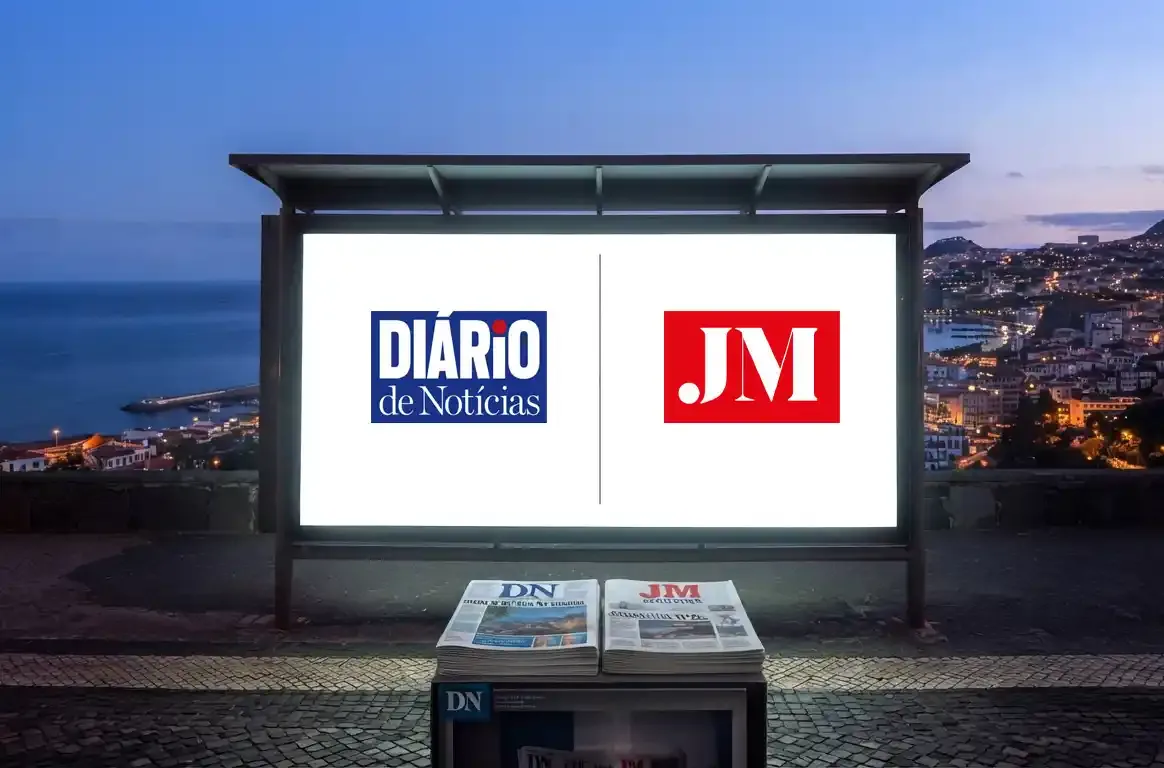
Madeira has a long newspaper tradition, with two daily publications playing a central role in how the island follows local politics, business and society. But behind the headlines are some of the region’s most influential business groups, raising legitimate questions about media ownership and potential conflicts of interest.
Diário de Notícias da Madeira and JM are more than newspapers. Both have long histories in Madeira, and both are now part of privately owned business structures. Understanding who controls them helps explain the island’s wider media landscape.
Diário de Notícias da Madeira: 150 Years in The Making
Founded on 12 October 1876 by Canon Alfredo César de Oliveira, Diário de Notícias is Madeira’s oldest daily newspaper. Its first edition appeared in Funchal, at a time when publishing a daily newspaper on an island was a considerable business risk.
The publication predates many major mainland Portuguese publications and has chronicled nearly 150 years of Madeiran history, weathering the transition from the Monarchy to the First Republic, the Estado Novo dictatorship, and the birth of Portuguese democracy. It survived political change, economic crises and major transformations in the newspaper industry. It launched its website, dnoticias.pt, in 1999, and marked its 150th anniversary in October 2026.
Today, the newspaper is published by Empresa do Diário de Notícias, Lda. Its ownership has changed several times. The newspaper’s own 150th-anniversary publication identifies two principal shareholders: Newspar – Multimédia, Lda., linked to Grupo Sousa, and Verbum Media – Comunicação, Lda., linked to Grupo AFA.
Shareholder | Reported stake | Business-group link |
|---|---|---|
Newspar – Multimédia, Lda. | 52.02% | Grupo Sousa |
Verbum Media – Comunicação, Lda. | 47.98% | Grupo AFA |
Total | 100.00% |
This represents a significant change from the structure publicly documented in 2020, when four shareholders were listed:
Shareholder | 2020 stake | Business-group link |
|---|---|---|
Newspar – Multimédia, Lda. | 40.00% | Grupo Sousa |
Verbum Media – Comunicação, Lda. | 36.89% | Grupo AFA |
Blandy SGPS, S.A. | 12.00% | Blandy Group |
Global Notícias – Media Group, S.A. | 11.11% | Global Notícias |
Total | 100.00% |
The current editorial director is Ricardo Miguel Oliveira.
How large is Diário de Notícias da Madeira?
The company reported around 60 employees and collaborators in its 150th-anniversary publication in October 2026. This includes editorial, commercial, marketing, technical and administrative staff, not only journalists.
Indicator | Figure | Source / date |
|---|---|---|
Employees and collaborators | About 60 | DN 150th-anniversary publication, October 2026 |
Newsroom professionals listed online | About 20 | DN staff information |
Average print circulation | 5,400 copies | DN technical information, August 2026 |
Registered share capital | €116,694.65 | Company information |
Latest independently verified annual turnover | Not publicly verified in the information reviewed | — |
The €116,694.65 figure is registered share capital, not annual revenue or the company’s market value. A reliable, independently verified figure for its latest annual turnover was not available in the public information reviewed.
It was founded on October 12, 1876, by Canon Alfredo César de Oliveira, a man of culture, an energetic parliamentarian, and an ardent polemicist. Considering his intellectual background as a combat journalist, the canon gave his daily a predominantly newsworthy character from the outset, covering as many regional facts as possible in order to captivate and interest all social strata, while continuing to agitate and defend the real problems of Madeira
JM: From Catholic Newspaper to Private Ownership
JM traces its history to 27 March 1906, when it was first published as Jornal – Diário da Tarde. It later appeared under names including Jornal da Madeira and O Jornal, before readopting the name Jornal da Madeira in 1952.
The newspaper originally had strong connections to the Catholic community. Its historical identity was closely linked to Catholic values and the defence of Madeira’s cultural and religious traditions.
For many years, JM was associated with the Diocese of Funchal and operated with public financial support. Its financial difficulties eventually led to privatisation. In April 2017, the Madeira regional government approved the sale of EJM to a consortium formed by Rádio Girão and ACIN for the symbolic price of €10,000, considering losses.
Owner | Reported stake | Link |
|---|---|---|
AFA Group, through Rádio Girão | 51% | AFA Group / privatisation process |
ACIN | 49% | Technology and digital-services group |
JM is operated by EJM – Empresa Jornalística da Madeira, Lda. Its editorial director is Miguel Silva.
How Large is JM?
JM’s published technical information lists 13 journalists in its newsroom, in addition to editorial management and commercial staff. It also operates JM-FM radio, giving the company a presence beyond print and digital news.
Indicator | Figure | Source / date |
|---|---|---|
Journalists listed | 13 | JM published technical information |
Other employees / collaborators | Estimated 26–50 | Third-party company database |
Annual turnover | Estimated €1m–€2m | Third-party company database |
Registered share capital | €50,000 | Company information |
Average print circulation | 5,100 copies | JM technical information, February 2022 |
Current independently verified circulation | Not publicly verified in the information reviewed | — |
The employee and turnover figures are third-party estimates, not confirmed figures from audited accounts. The 5,100 circulation figure is from 2022 and should not be treated as current.
Left, Right or Centrist?
You might ask whether Madeira’s newspapers lean politically to the left or the right.
The answer is not straightforward. Neither publication has a verified, independent left-right classification that would justify confidently labelling it left-wing, right-wing or centrist.
Both newspapers describe themselves as independent and committed to objective journalism. Diário de Notícias says it supports Madeira’s interests and political autonomy, while committing itself to pluralism and impartiality. JM similarly claims editorial independence from political, economic and ideological interests.
JM’s historical Catholic background is relevant to understanding its institutional identity. However, it would be inaccurate to classify its present-day reporting as conservative or right-wing simply because of its origins.
A more useful distinction is that both publications have a strong regional focus. Madeira’s autonomy, economic development and local interests play an important role in their editorial priorities.
The Business Interests Behind the Headlines
This is where ownership becomes particularly relevant.
Grupo Sousa has extensive interests in maritime transport, logistics and other business activities. AFA Group has interests in construction, property, tourism and other sectors.
Newspaper | Publisher | Principal owners | Business interests connected to ownership |
|---|---|---|---|
Diário de Notícias | Empresa do Diário de Notícias, Lda. | Newspar / Grupo Sousa; Verbum Media / Grupo AFA | Maritime transport, logistics; construction, property, tourism |
JM | EJM – Empresa Jornalística da Madeira, Lda. | AFA Group, through Rádio Girão; ACIN | Construction, property, tourism; technology, digital services and cloud solutions |
Grupo AFA Has Interests in Both Major Newspapers
This means that Grupo AFA has interests in both of Madeira’s major newspapers: directly through Verbum Media in Diário de Notícias, and through Rádio Girão in JM.
It gives the same business group a significant ownership position in both of Madeira's leading newspapers, creating an unusually close connection between the island's media sector and one of its major corporate groups.
A 51% / 49.0% ownership breakdown in Jornal da Madeira (JM) or the 52.02% / 47.98% split in Diário de Notícias—is a razor-thin margin financially, yet it creates a massive gap in legal control.
Under Portugal’s Commercial Companies Code (Código das Sociedades Comerciais), which governs private limited companies (Lda.) like both newspaper publishers, crossing the 50% threshold gives the majority shareholder control over day-to-day operations and management appointments. However, because major structural decisions—such as amending the company's bylaws, changing share capital, or dissolving the business—typically require a 75% supermajority, a ~48% to 49% minority partner still retains an effective veto over fundamental changes.
What the 51 Majority Owner Can Do Alone
A majority stake generally gives a shareholder greater influence over corporate decisions, although the precise extent of that control depends on the company's articles of association, applicable voting rules and management arrangements. It should not, by itself, be taken as evidence of direct control over editorial decisions.
Newspaper | Single print copy | Digital single issue | Digital subscription |
|---|---|---|---|
Diário de Notícias da Madeira | €1.50 (VAT included) | Not verified | €9.99/month |
JM Madeira (Jornal da Madeira) | Not verified | €1.49 | €25/month · €32/quarter · €50/6 months · €70/year |
Where Could Conflicts Arise?
Media ownership by business groups is not automatically a problem. Private investment can provide newspapers with the financial resources they need to survive, particularly in a small market such as Madeira.
However, potential conflicts of interest deserve attention.
Consider a newspaper reporting on a major construction project, a tourism development or a public infrastructure investment. If its shareholders have commercial interests in those sectors, readers have a legitimate reason to ask whether the reporting is fully independent.
The same applies to maritime transport, logistics, property development and public contracts.
Potential risk | Why it matters |
|---|---|
Editorial influence | Owners may have an interest in how particular companies, projects or political decisions are covered |
Advertising pressure | Large commercial relationships can create pressure even without direct instructions to journalists |
Political relationships | Business groups operating in Madeira regularly interact with regional and municipal authorities |
Market concentration | When the same business group has interests in more than one major publication, the range of independent editorial perspectives may narrow |
None of these points establishes rock solid evidence that either newspaper has compromised its journalism. Nevertheless, transparency about ownership, commercial relationships and editorial safeguards is essential.
Why This Matters to Madeira
In a small island community, newspapers have a particularly important role. They help residents understand political decisions, follow public spending and hold institutions and businesses accountable.
Madeira’s media market is also relatively concentrated. The ownership structures of its two major newspapers show how closely journalism and the region’s business environment can be connected.
Ultimately, media independence is not only about what journalists write. It is also about who owns the companies behind them, what other interests those owners have, and whether newsrooms can always report freely when those interests are involved.


Comments